Bio-Diesel Project
Starting a bio-diesel project involves a multi-step process that requires careful planning and attention to various aspects of the business, from land acquisition to regulatory approvals. Here’s a structured approach to help you get started:
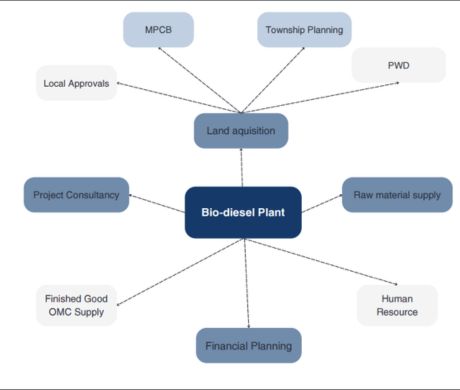
Land Acquisition
Project Consultancy
Project Finance
Raw Material Supply
Government Approvals
OMC (Oil Marketing Companies) Agreement
1. Land Acquisition
- Location: Choose a location that is strategically positioned near raw material sources (like oilseeds, agricultural waste, etc.) and has good access to transportation for distribution.
- Land Size: The size of the land will depend on the scale of your bio-diesel plant. Typically, you’ll need space for both production facilities and storage.
- Legal Considerations: Ensure the land has clear legal titles and is zoned appropriately for industrial use.
2. Project Consultancy
- Feasibility Study: Hire a professional consultancy to conduct a thorough feasibility study. This will cover market analysis, technological requirements, production costs, and potential profitability.
- Business Plan: Develop a comprehensive business plan that includes financial projections, environmental impact assessments, and a clear path to profitability.
- Technology Selection: Choose the appropriate technology for bio-diesel production. There are various methods, including transesterification (most common), that differ in efficiency and costs.
3. Project Finance
- Capital Investment: Bio-diesel projects require substantial capital for equipment, land, and working capital. Sources of funding may include:
- Equity Investment (internal funds or investors)
- Loans (commercial or government-backed loans)
- Grants/Subsidies (government support for renewable energy projects)
- Cost Estimation: Detailed cost breakdown for machinery, labor, and operations is essential. Be sure to factor in recurring expenses like raw materials, utilities, and labor costs.
4. Raw Material Supply
- Sourcing: Bio-diesel is typically produced from vegetable oils (like palm, soy, or canola) or animal fats. Alternatively, waste oils and non-food crops can be used to reduce the environmental impact.
- Supply Chain: Establish reliable contracts with suppliers to ensure a steady supply of raw materials. This could involve partnerships with farmers or waste collection companies.
- Storage & Handling: Proper storage facilities must be in place to handle raw materials safely and prevent contamination.
5. Government Approvals
- Environmental Compliance: Ensure compliance with local and national environmental regulations. This may include air quality standards, waste management, water usage, and land usage.
- Regulatory Bodies: You may need approvals from environmental agencies, energy regulatory authorities, and health & safety boards.
- Permits: Apply for construction, operation, and pollution control permits. Some regions might also require licenses for manufacturing renewable energy products like bio-diesel.
6. OMC (Oil Marketing Companies) Agreement
- Partnerships with OMCs: Collaborate with Oil Marketing Companies (OMCs) or fuel distributors who will purchase your bio-diesel. OMCs may help with market access and distribution channels.
- Pricing Agreements: Negotiate pricing, delivery schedules, and terms with OMCs or other end customers.
- Supply Contracts: Secure long-term agreements with OMCs to ensure consistent demand and better cash flow stability.
By following these steps, you’ll ensure a smoother launch of your bio-diesel project. Each stage requires careful planning and coordination, and building relationships with stakeholders (suppliers, OMCs, and government agencies) is key to success.